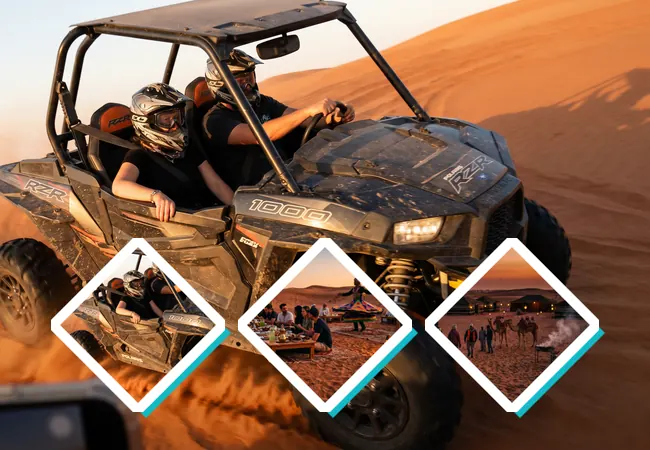
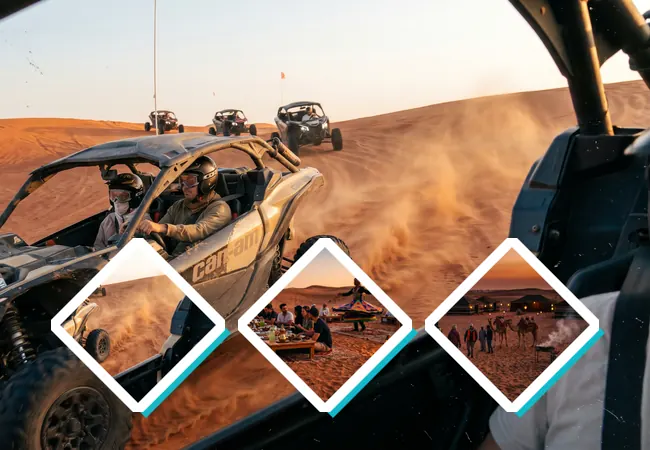
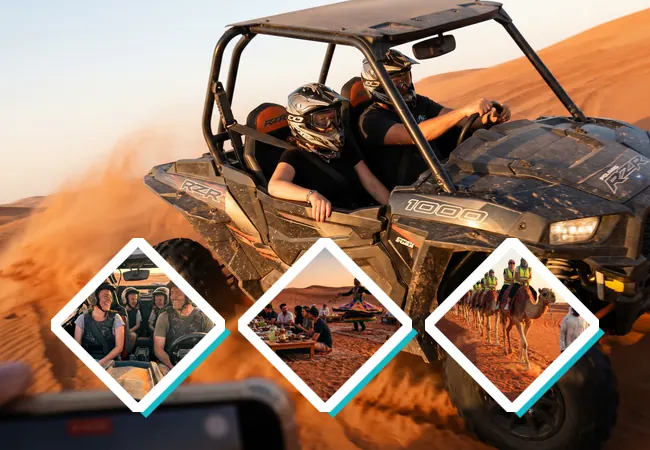
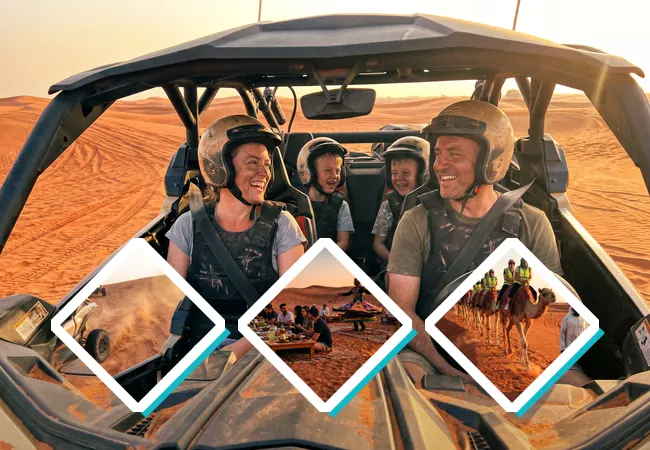
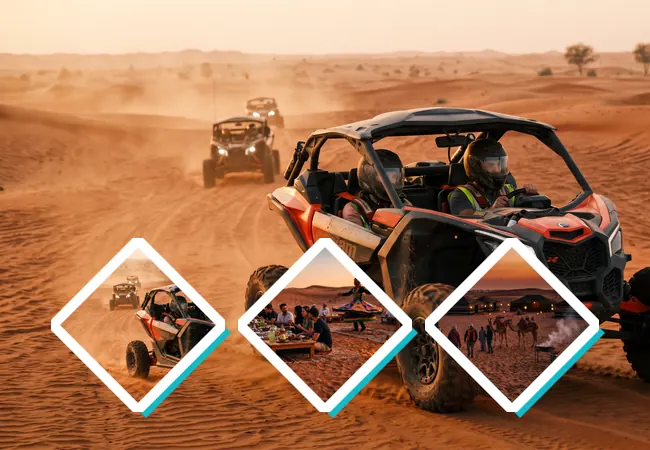
What does driving a dune buggy in Dubai actually feel like, second to second?
Sand hits your goggles before you consciously register that you are already sideways. The harness pins your shoulders to the seat, the engine sits right behind your head, and every second the front end is negotiating something new with the ground underneath it.
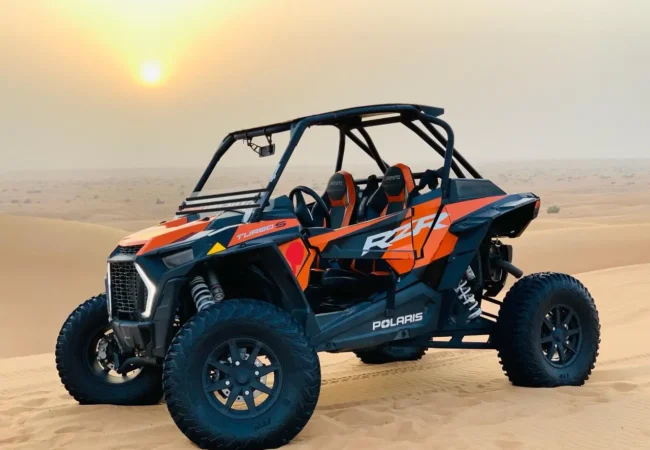
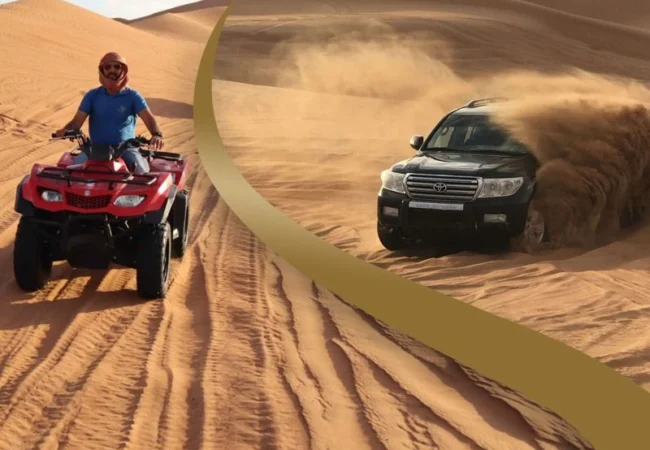
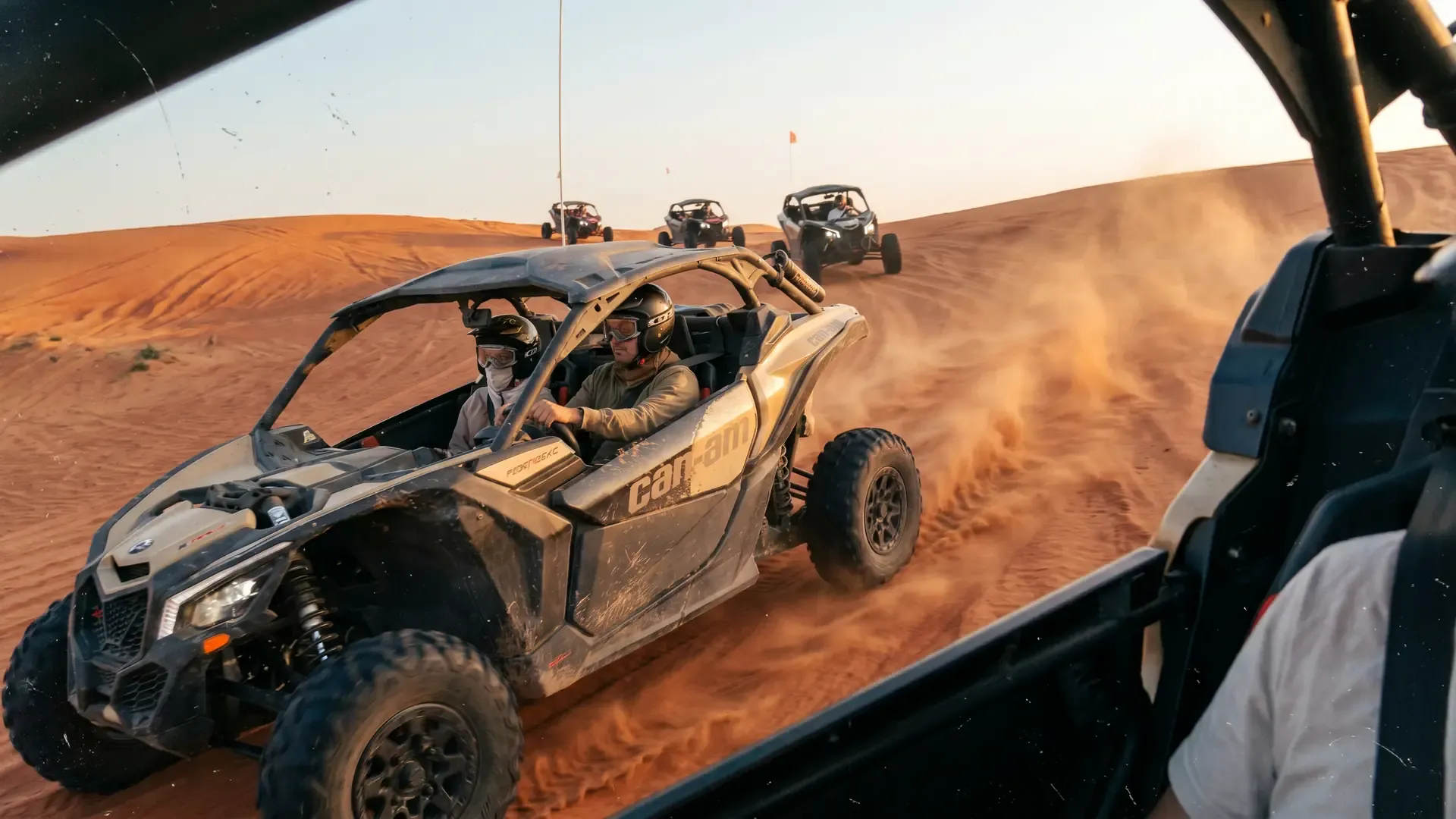
The first few seconds off the line on flat warm-up ground do not prepare you for anything that comes after, and that is by design. Throttle response on a Polaris or Can-Am is immediate in a way most rental cars are not — press down and the machine moves now, not half a second later. The engine sits directly behind your head rather than out front under a hood, so the note changes pitch right next to your ear every time you get on or off the gas, and you feel the vibration of it through the wheel and the floor before you have even processed the sound.
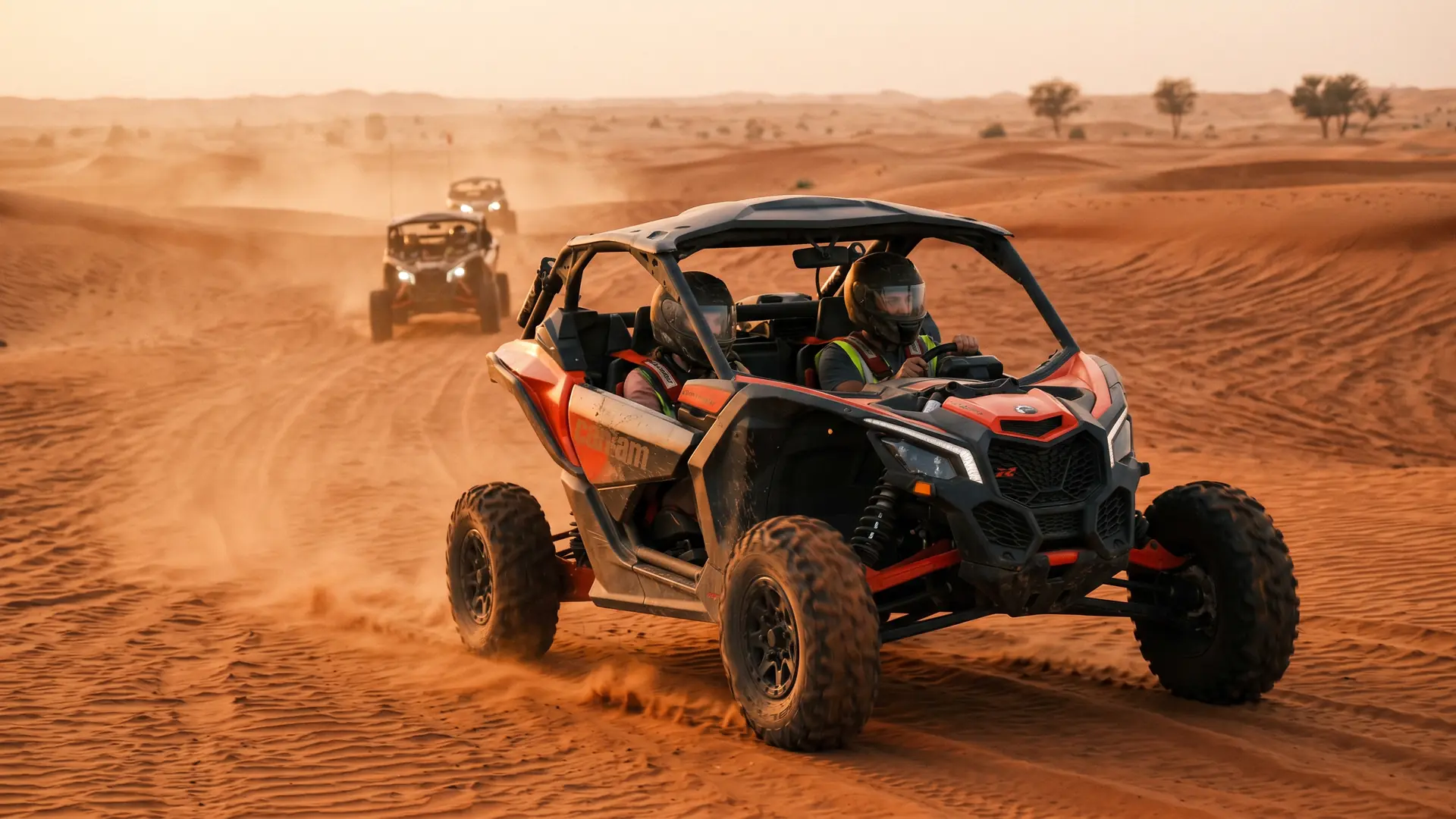
Then you hit the first real dune face and the whole character of the ride changes. The nose pitches up, your weight presses back into the harness, and sand starts arriving on your goggles in a fine, constant spray kicked up by the machine ahead of you and your own front tyres biting in. The engine note climbs as it works harder against the incline, the wheel goes light and slightly vague in your hands as the tyres search for grip in loose sand, and your stomach does something it does not do on a paved road.
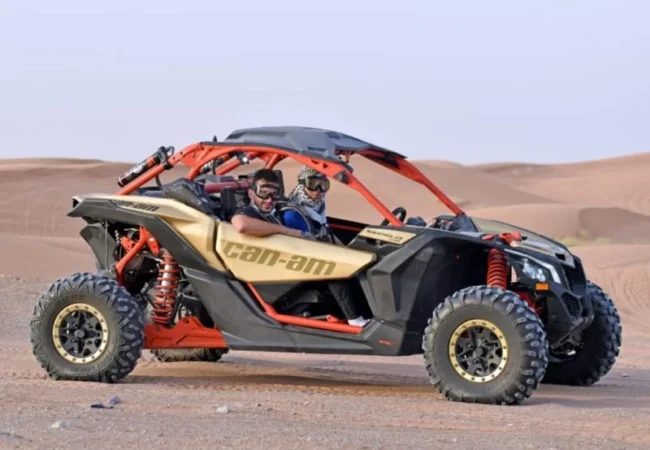
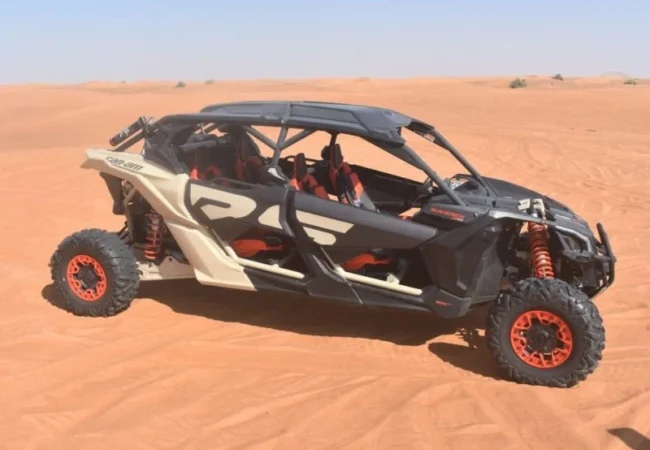
Cresting a dune produces a half-second of near-weightlessness that nobody quite describes accurately beforehand — the machine goes light under you, the horizon drops away, and then the front end tips over and gravity reintroduces itself on the way down. This is where the suspension earns its keep. A standard Polaris soaks up a moderate landing without much drama; the long-travel setup on a Can-Am X3 swallows a harder one and keeps the wheel from kicking in your hands. It is also where the two machines stop feeling similar, and part of why the fleet spans from beginner-friendly to genuinely fast rather than one size fitting everyone.
By the back half of a longer booking, your body stops treating each dune as a separate event and starts reading the terrain a beat ahead — leaning into a bank before you consciously decide to, easing off the throttle on a blind crest without being told. That shift from reacting to anticipating is the part almost nobody expects walking in, and it is usually the moment people ask about upgrading machines on their next visit. The full spread of what each one feels like to drive sits in the fleet section above.
Is a dune buggy ride in Dubai actually scarier than it looks?
Less than it looks in photos, more than it looks on a quiet drive to the desert. Nerves usually peak in the car on the way there and drop the moment the warm-up starts, because that is where the guide quietly sizes up how ready you are before deciding how much dune you get.
Photos and video of buggies cresting dunes at speed do the marketing a disservice, because they make the whole activity look more extreme than the actual booked experience usually is. Most of the anxiety riders describe afterward was front-loaded into the hour before arrival, not the session itself. Once gear is on and hands are on the wheel, the abstract fear of “a dune buggy” gets replaced by a much more manageable, specific task: keep this exact machine pointed where the guide is pointing, at a pace you are setting yourself.
The warm-up is doing more work here than it looks like from the outside. Circles on flat sand feel almost silly for the first couple of minutes, and then you notice the guide is not just standing there — they are watching how you brake, how you handle the throttle, whether you oversteer correcting a small drift. That observation directly decides how much dune face you get afterward. Riders who look tense or uncertain get a gentler route with smaller faces and more space between machines. Nobody announces which category you landed in, which is exactly the point — it never feels like being sidelined, it just feels like the ride that matches you.
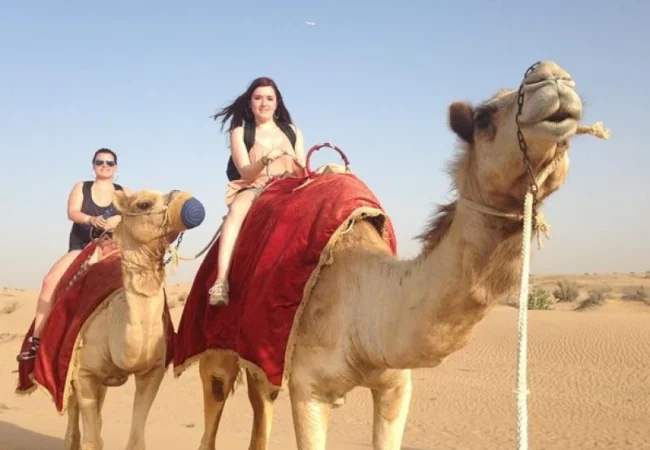
For genuinely nervous first-timers, or anyone travelling with someone who gets carsick or anxious on unfamiliar terrain, the honest advice is to say so before the session starts rather than push through quietly. Guides adjust for stated nerves far more easily than for a rider who freezes mid-dune having said nothing. It also helps to know there is a real alternative sitting right next to the buggy fleet: a camel ride covers the same red sand at a pace that removes the adrenaline question entirely, which is a fair option for anyone in the group who takes one look and decides today is not the day.
What actually happens to fear during a session, for most people, is that it converts into concentration within the first five minutes and rarely comes back in the same form. The moments that startle people later in a longer booking tend to be surprise, not dread — a sharper drop than expected, a burst of speed on an open stretch — and by then there is usually a grin attached to it rather than a flinch. Full detail on what is included for safety, and who should sit this one out entirely, is covered in the safety and suitability section.
Does a 30-minute buggy ride actually feel like 30 minutes?
No, and not in the way marketing usually means that. Clock time and felt time genuinely diverge — most riders on the 30-minute entry session report it feeling shorter than the drive out to Al Lahbab, while a 2-hour booking stretches out with real rest stops and starts to feel like an actual outing rather than a quick activity.
Thirty minutes sounds like a short window when you are reading it on a price table, and in practice it goes even faster than that once you are actually driving. Time compresses hard under concentration, and a 30-minute buggy session is close to pure concentration from the moment the warm-up ends. Riders consistently describe it afterward as feeling like ten or fifteen minutes, which is part of why so many people who booked the entry session end up asking about extending on the spot rather than treating it as a complete experience.
An hour is where the time perception starts to normalise a little. There is enough of it to get through the warm-up, settle into the machine, hit a proper stretch of dunes, and still register that a session actually happened rather than blurred past. This is also usually the point where nervousness has fully burned off and the second half of the hour feels noticeably different from the first — more assured, more willing to commit to a line instead of hesitating at it.
Two hours is a different category of time altogether, closer to an outing than a ride. There is a real rest stop built into the middle, which changes the rhythm completely: you get off the machine, drink water, look at where you have been, and then get back on for a second half that feels like a fresh start rather than a continuation. Riders who have only done the 30-minute version are often surprised at how much the pacing changes once fatigue and rest become part of the picture instead of pure adrenaline start to finish.
The practical takeaway is to book duration based on what kind of memory you want, not what sounds efficient on paper. A short session compresses into an intense flash that is over almost as soon as it starts. A longer one gives you enough time to notice yourself getting better at it mid-session, which is its own kind of satisfying that a 30-minute taster simply cannot fit in. Full pricing across all four durations is laid out in the price table above.
Can you ask your guide to ride gentler, or push harder, once you are already out on the dunes?
Yes, and it is a completely normal request in both directions. Guides read body language constantly, but a spoken request during a stop — for an easier line or a faster one — gets acted on immediately rather than waiting for the guide to guess.
The lead guide's job for the entire session is reading the group and adjusting the route to match, which means the pace you get at the start is a starting estimate, not a fixed script. If the warm-up assessment placed you on a gentler line and it turns out you are handling it comfortably with room to spare, saying so at the next stop is the normal way to get moved onto bigger faces. Guides would rather hear it directly than watch someone quietly get bored on an easy route for an hour.
The same works in the other direction, and it happens more often than people expect. Adrenaline during the warm-up can make a rider overestimate their comfort level, and the first proper dune face is where that gets corrected fast. Telling the guide to ease off is not treated as a failure or an inconvenience — it is treated as exactly the kind of information that makes the rest of the session better for everyone in the group, since one uneasy rider affects the spacing and pace of the whole convoy.
Requests tend to land best at the natural stops built into the route rather than shouted mid-dune, partly because communication over engine noise and a helmet is genuinely difficult, and partly because a stop is when the guide is actually looking at you rather than the terrain ahead. A raised hand or a clear gesture during a stop covers both directions of the request — slower or faster — and gets folded into the next stretch of the route without any drama.
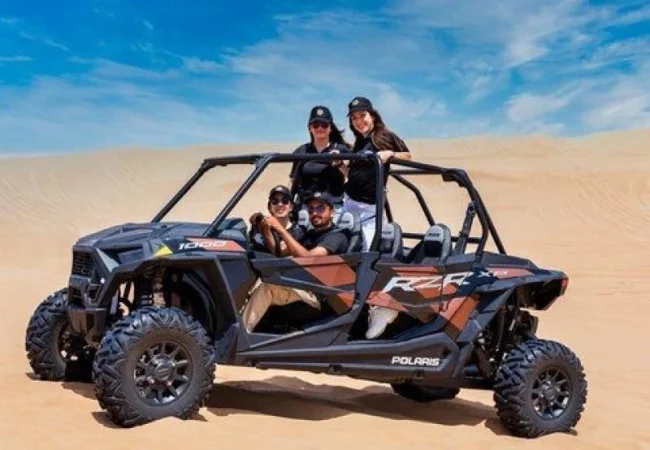
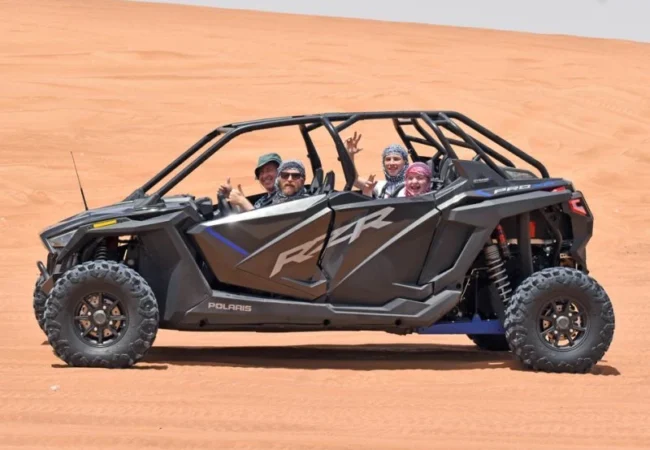
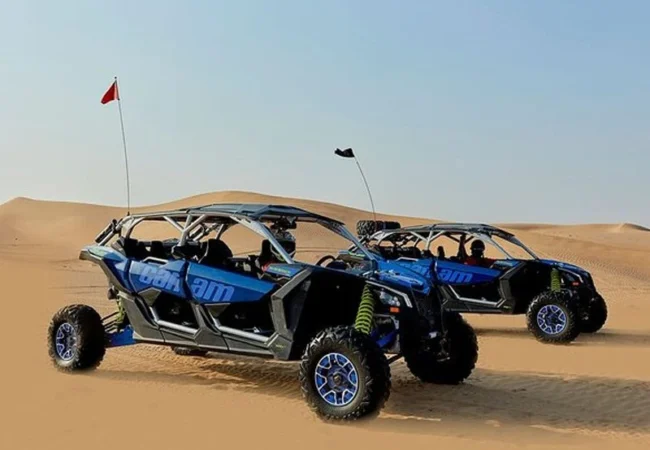
Groups with a wide range of confidence levels benefit from this the most. A 4-seater or a pair of buggies travelling together does not have to move at the pace of its most nervous rider for the entire booking; the guide can stagger difficulty across a longer session as people warm up at different rates. The two-question filter for picking a starting machine and pace in the first place is covered in the chooser section above, but once you are out there, none of that is locked in stone.
What is the actual protocol if you want to stop or slow down mid-ride?
A raised hand or the guide's own stop signal, taught during the briefing, is all it takes. Every session includes a clear stop and slow-down gesture before you move an inch, and using it is routine, not an admission that something has gone wrong.
Every briefing before a session covers hand signals specifically because engines and helmets make shouted communication nearly impossible once you are moving. The stop signal and the slow-down signal get demonstrated and checked before the warm-up even starts, which means the tool for pausing the ride is already in your hand before you need it, not something you have to invent in the moment.
Using it is far more common than people assume, and it is not treated as an incident. Reasons range from wanting a photo, needing to adjust goggles or a harness strap, feeling a wave of nausea, or simply wanting thirty seconds to catch your breath before the next stretch. The lead guide is watching for these signals constantly, riding at a pace that allows a scan back over the group rather than just forward at the terrain, which is part of why spacing between machines gets set the way it does.
If something feels properly wrong rather than just needing a short pause, the same signal applies and the guide adjusts the entire remaining route around it, not just that one moment. That might mean shifting the rest of the session to flatter ground, ending early with the time banked for a future visit, or simply riding closer for the remainder so a check-in is easier. None of this requires explaining yourself at length in the moment. A raised hand is a complete sentence out there.
What surprises most people is how little friction there is in actually using the signal, especially for anyone worried about holding up their group or looking overly cautious. Guides have seen every version of this before, and a rider who communicates clearly is, from their side, the easy version of the job. The full sequence from pickup to the drive home, including exactly where these check-ins naturally happen, is laid out in the session-flow section above.
How different is a sunset buggy ride from a midday one?
The temperature drops, the sand deepens toward a richer red, and the shadows off every ridge get long enough to actually show the shape of the dune instead of flattening it. Late afternoon is also when the route naturally hands off into an evening BBQ combo, if you have booked one.
Midday sun in Dubai does something specific to red sand: it flattens it. Direct overhead light washes out the texture and colour that make Al Lahbab distinctive in photographs, and the heat itself becomes a real factor in how the session feels, particularly outside the cooler months. None of that makes a midday ride bad — the mechanics of driving are identical — but the sensory experience is noticeably flatter than what the same dunes offer a few hours later.
As the sun drops toward the horizon, the same terrain starts throwing long shadows off every ridge and crest, which does something practical as well as beautiful: it makes the shape of the dune ahead of you much easier to read at a glance. Contours that were nearly invisible under flat midday light suddenly stand out, and the colour shifts from a dusty orange toward a deeper, richer red that is the version of Al Lahbab most people picture when they book this in the first place.
The drop in temperature does more work than you would guess from reading about it. Cooler air means less fatigue over a longer session, a more comfortable ride under a full helmet, and noticeably less dust haze hanging in the air after each machine passes, since heat is part of what keeps fine sand suspended. It is a genuinely different physical experience behind the wheel, not just a different-looking one in photos afterward.
Sunset timing is also the natural handoff point into an evening booking. Anyone on a buggy-plus-BBQ-dinner combo rides the dunes while the light is doing all of the above, then rolls straight into the camp as the sky finishes changing colour rather than backtracking into the city first. It is a large part of why the evening combos consistently outsell the equivalent midday sessions.
What actually surprises first-time riders about their first buggy session?
Almost never the speed. The two things that come up again and again afterward are how physical it is on your arms and core, and how fast nerves turn into focus once the machine is actually moving.
Ask people what surprised them after their first session and speed is rarely the answer, even though it is the thing most first-timers brace for beforehand. What actually catches riders off guard is how physical the whole thing is — forearms working constantly to correct the wheel over uneven ground, core muscles bracing through every dip and crest, a kind of full-body tiredness afterward that a purely visual idea of “driving a buggy” does not prepare you for.
The second most common surprise is how quickly the nervous energy from the drive out converts into pure focus once the warm-up starts. People who spent the car ride to Al Lahbab quietly dreading it often describe forgetting to be scared within the first few minutes of actually holding the wheel, simply because there is too much immediate, specific information to process — throttle, line, the machine ahead — to keep worrying about the abstract idea of the activity.
A smaller but recurring one: how sociable the whole thing turns out to be, even though you are alone in the driver's seat for most of it. Stops become genuine conversation points between machines, the lead guide checks in enough that it feels more like riding with someone than being marshalled by them, and by the return leg most groups are already comparing notes about who handled which dune best. It rarely feels like the solitary, white-knuckle activity it looks like from outside a helmet.
And then there is the sand itself, which nobody quite believes until it happens to them. It gets into pockets, boots, collars and camera bags regardless of how carefully anyone dressed for it, and it is somehow still turning up in a jacket a week later. It is a small, slightly funny footnote to an otherwise intense afternoon, and it shows up often enough in conversations after a session to earn a mention here on its own. What other riders have said about their own first sessions is collected in the Al Lahbab and reviews sections above.
People also search for
Guide FAQ
Can I switch which machine I booked once I arrive?
Sometimes, if availability allows and you ask before the briefing starts rather than mid-session. It is not guaranteed, since fleet allocation is set ahead of time, but staff will accommodate a switch when they can. Message on WhatsApp ahead of time if you already know you want to change.
Do sunglasses work instead of the provided goggles?
No. Goggles are required over the helmet regardless of what eyewear you arrive in, because sunglasses do not seal against blown sand the way goggles do. Prescription glasses can usually be worn underneath, but mention it when you arrive so the right size gets handed to you.
Is there anywhere to leave bags or valuables during the ride?
Yes, there is secure storage at the base for anything you are not taking with you, plus a pocket on the buggy itself for small items once they are properly strapped in. Leave anything you would be upset to lose in storage or with staff rather than loose in the buggy.
Can I request a specific photo stop during the ride?
Yes, tell the guide during a natural pause and they will work it into the route where the terrain allows. The scheduled stops already hit the more photogenic ridge lines, but a specific spot you have seen online is usually workable with a quick heads-up.
How many other buggies are typically out on the dunes at the same time?
It varies by slot and season, but spacing between machines is actively managed by the guide rather than left to chance, so it rarely feels crowded even on a busy weekend. Private bookings and the smaller machines tend to get quieter windows than peak Friday and Saturday afternoons.
Does the session stop for a water or rest break automatically?
On anything an hour or longer, yes, a break gets built into the route without you needing to ask. On the 30-minute entry ride there usually is not time for a formal stop, though water is available before and after regardless of duration.
Can I ride if I wear contact lenses?
Yes, contact lenses are generally easier under goggles than glasses. Bring lens solution or spares if you are prone to dry eyes, since a full session in wind and sun can be more drying than an average day.
Is there a minimum age to drive, separate from the passenger age rules?
Yes. The minimum driving age sits above the passenger minimum, and it gets confirmed at booking rather than left ambiguous. If you are booking for a teenager specifically, mention their age on WhatsApp before you pay so there are no surprises at the briefing.
What is actually different about riding here versus a roadside rental near Big Red?
Guide-led route control, a genuine warm-up assessment, and machines that get inspected between sessions rather than just refuelled. Roadside operations nearer the main road tend to run shorter, less varied loops on more heavily used sand, with far less oversight of who gets handed which machine.
Do you offer anything for someone who wants to watch rather than ride?
Yes, non-riding companions are welcome to wait at the base or the camp rather than sit in a buggy they do not want to be in, and seating and shade are available there. It is worth mentioning at booking so numbers and transport are planned around it correctly.
 AED 599